Showing posts with label Passat. Show all posts

Sunday, October 3, 2010

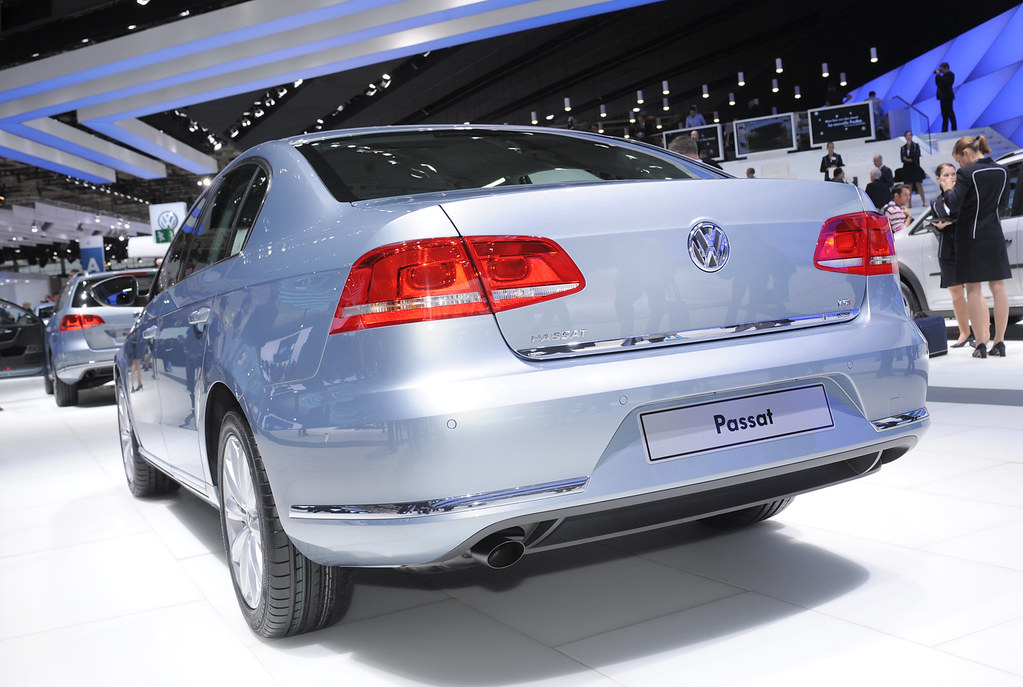
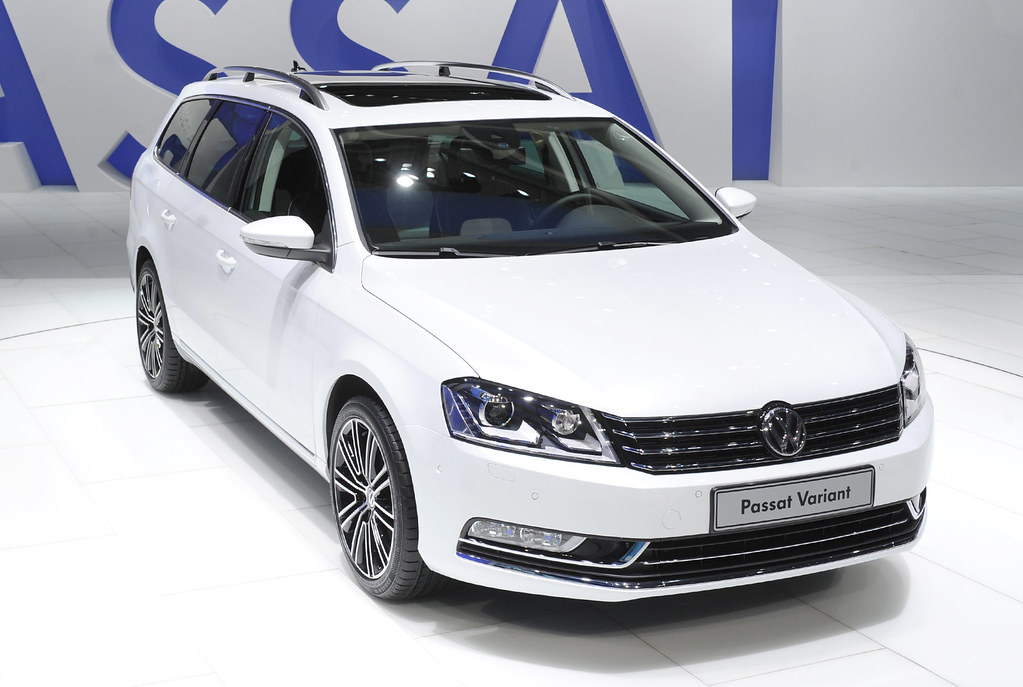
Passat Live Images from Paris Auto Show 2010


World Premiere of the New Passat:
4.2* litre per 100 km fuel economy and a front end in the style of the Phaeton


• 7th generation Passat has new styling and extremely fuel-efficient engines

• Assistance systems and quality match those of a higher vehicle class

Wolfsburg / Paris, 29 September 2010 - The Passat from Volkswagen represents one of the very great success stories in automotive history, with over 15 million cars sold since the Passat was first launched in 1973. It is now available in over 100 countries across the globe. Now, at the Mondial de l’Automobile in Paris (October 2-17), Volkswagen is presenting the world premiere of an entirely new Passat – as a saloon and an estate car simultaneously. The seventh generation of this bestseller will be available in initial European markets starting as soon as mid-November.


To the point – upper class flair in a mid-class car
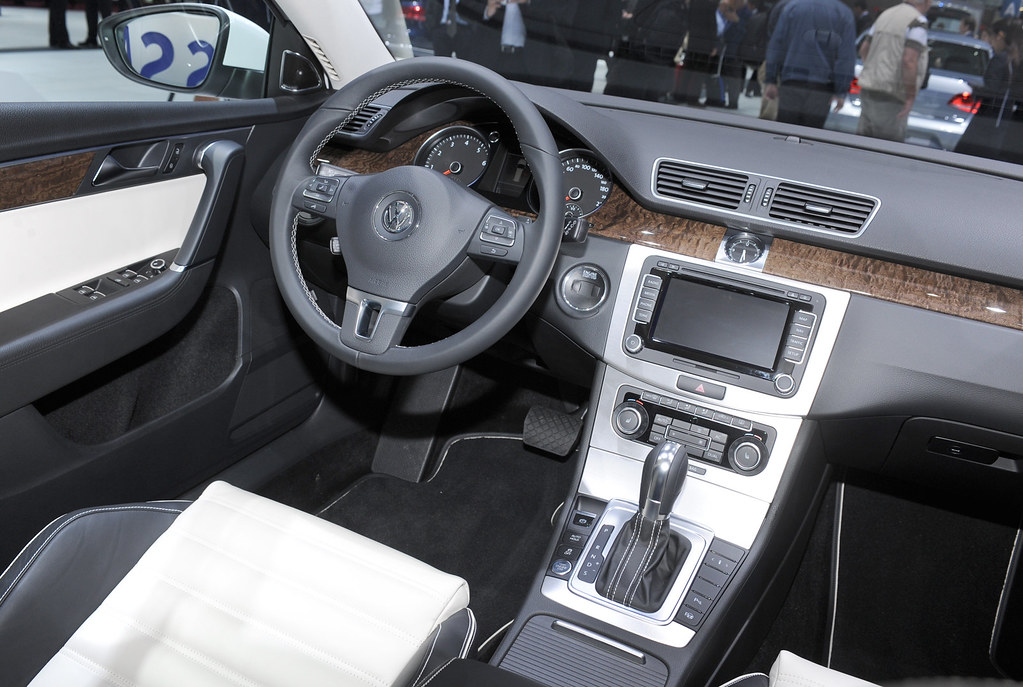
The fifth and sixth Passat generations had already left conventional class boundaries behind and bridged a path to the next higher segment with their high-end features. The seventh generation Passat emphatically continues this trend. A completely new styling configuration was created; its front-end styling follows that of the Phaeton which was restyled mid-year. It simultaneously guides the Passat’s independent design into the future. Without leaving the mid-class in terms of pricing, the Passat approaches the top segments even more powerfully with its upgraded comfort, convenience, quality and safety properties as well as in its assistance systems. In fact, the Passat - available in Trendline, Comfortline and Highline equipment levels - now offers more value thanks to its optimised features. For example, standard equipment on all turbodiesel models of the base Trendline version now includes the energy-saving Stop/Start system and battery regeneration. All other petrol and natural gas engines have a battery regeneration system as well. For the smallest petrol engine, battery regeneration and the Stop/Start system are available as options.

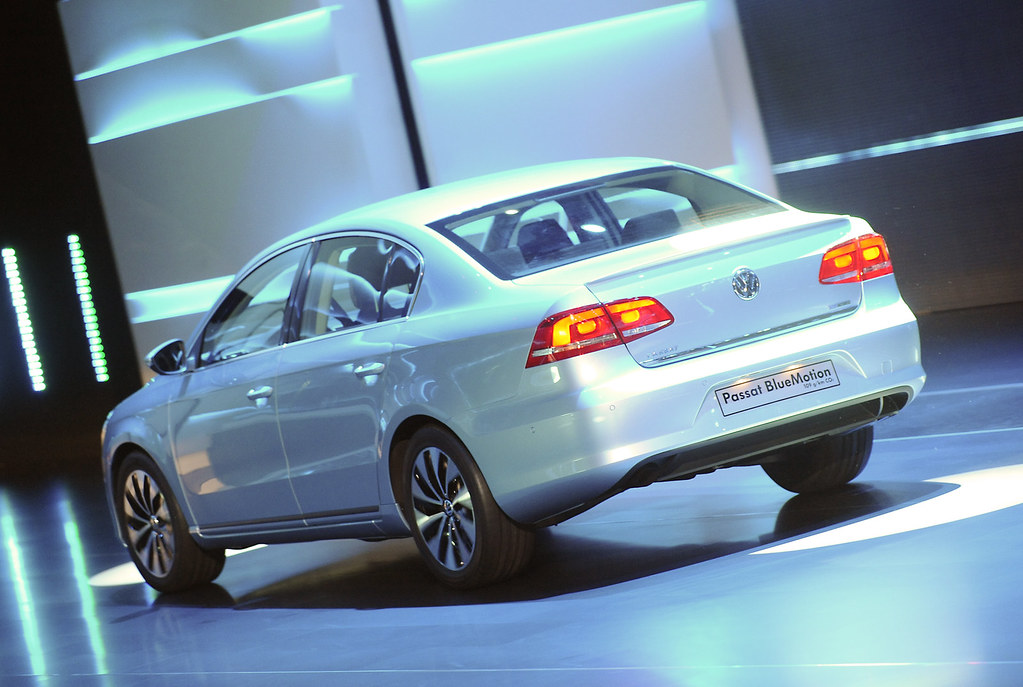
Up to 18 percent improved fuel economy: As is usual for a Volkswagen, the new Passat also sets standards in sustainability. All ten engines (77 kW / 105 PS through 220 kW / 300 PS) are more fuel efficient – up to 18 percent more. The "smallest" and yet torque-strong turbodiesel (1.6 TDI with 105 PS and 250 Nm) now consumes just 4.2* l/100 km; that is equivalent to 109* g/km CO2. Meanwhile, downsizing and technologies such as the Stop/Start system contribute to extraordinary fuel efficiency in the petrol-powered versions. Pioneering here is the 1.4 TSI (90 kW / 122 PS); in the BlueMotion Technology version, it only consumes 5.8 l/100 km. The equivalent CO2 value is 138 g/km.

New safety features: Volkswagen is making genuine progress in the area of safety. The previous model already attained an impressive five stars in Euro-NCAP crash testing. The new model takes safety to a new level with features such as an automatic City emergency braking function and, on Comfortline models and above, a standard fatigue detection function. As a component of the optional automatic ACC adaptive cruise control system, in worst case scenarios the emergency braking function reacts independently at speeds below 30 km/h. So, it can help prevent frontal collisions. The fatigue detection system, which Volkswagen is introducing for the first time in this class, is continually active; it detects reduced driver concentration and warns the driver with an acoustic signal; a visual message also appears in the instrument cluster recommending that the driver should take a break from driving.

Another new feature on the Passat: the continually active masked main beam headlights known as Dynamic Light Assist; this is the same system as the one first introduced on the new Touareg. Dynamic Light Assist – an option offered in conjunction with bi-xenon headlights - enables continual use of the main beam headlights while driving. Via a camera, the system detects oncoming traffic and cars driving ahead and automatically masks only those lighting areas relevant to glare. The results: improved illumination of the carriageway in nearly all situations. The Passat is the first car in its class to have this system. For vehicles with conventional halogen headlights, a simpler version of automatic main beam control is available: Light Assist. A camera is also used here, e.g. to detect oncoming traffic. But the system switches over completely between main beam and dipped beam. As soon as there is no more oncoming traffic, the main beam is reactivated.

The XDS electronic transverse differential lock - first introduced on the Golf GTI - improves traction in bends. Along with Lane Assist (lane keeping assistant), which was also available in the previous model, there will now also be a Side Assist function, which uses flashing LEDs in the door mirrors to call the driver’s attention to vehicles located laterally to the rear or next to the Passat or a vehicle approaching quickly from the rear. A new, direct measuring tyre pressure monitoring system also signals potential loss of tyre pressure - individually for each wheel. The pressures of all tyres may also be displayed in the instrument cluster.

Innovative convenience systems: Other new assistance systems are essentially convenience oriented, and they significantly simplify everyday driving. They include Easy Open: If the new Passat saloon is equipped with Keyless Access (automatic locking and engine starting system), a specific foot motion behind the vehicle is sufficient to cause the boot lid to open. Anyone who has stood next to a car with both hands full knows know helpful a function like Easy Open can be. Naturally, the boot lid only opens for someone who is carrying the proper RF identification fob for the Passat. The human-machine interface here is a sensor located in the bumper area.

Also new in the Passat: The rear seat system that can be unlatched from the bootspace, a towbar that can be made to swivel out at the press of a button and side windows in noise-dampening compound safety glass. As in the new Sharan, Park Assist II will now also be offered on the Passat; this system not only can steer into parking spaces parallel to the carriageway; it can also find its way into parking spaces perpendicular to it. Last but not least, the Passat’s RNS 510 navigation system detects speed limit signs by camera and sends them to the touchscreen in the centre console.

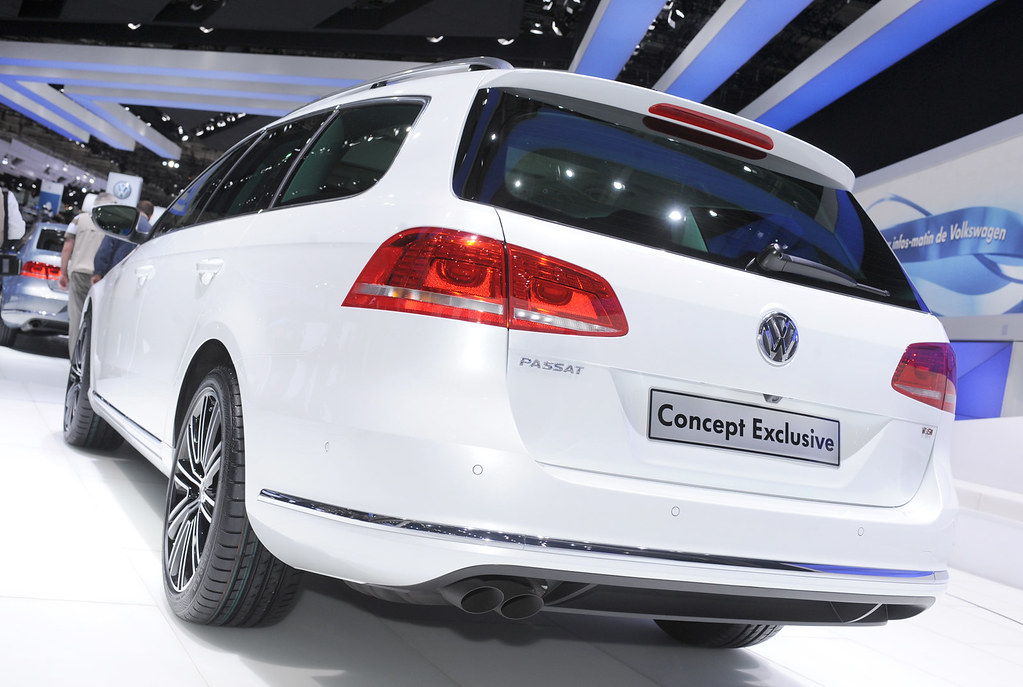
Passat Variant Exclusive Concept


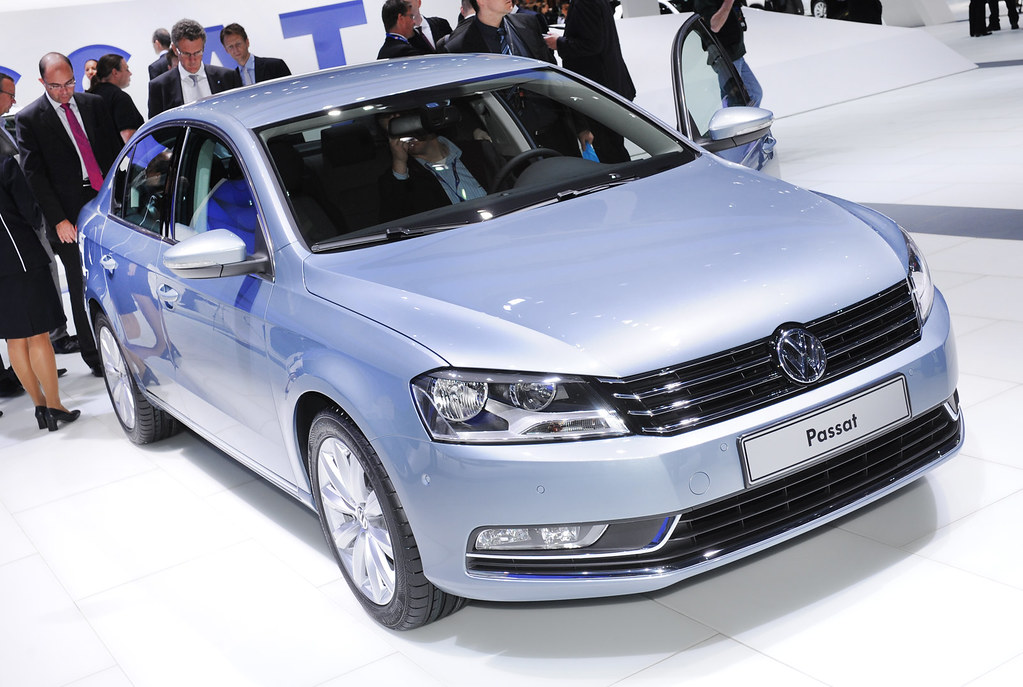
Passat TSI with BlueMotion Technology


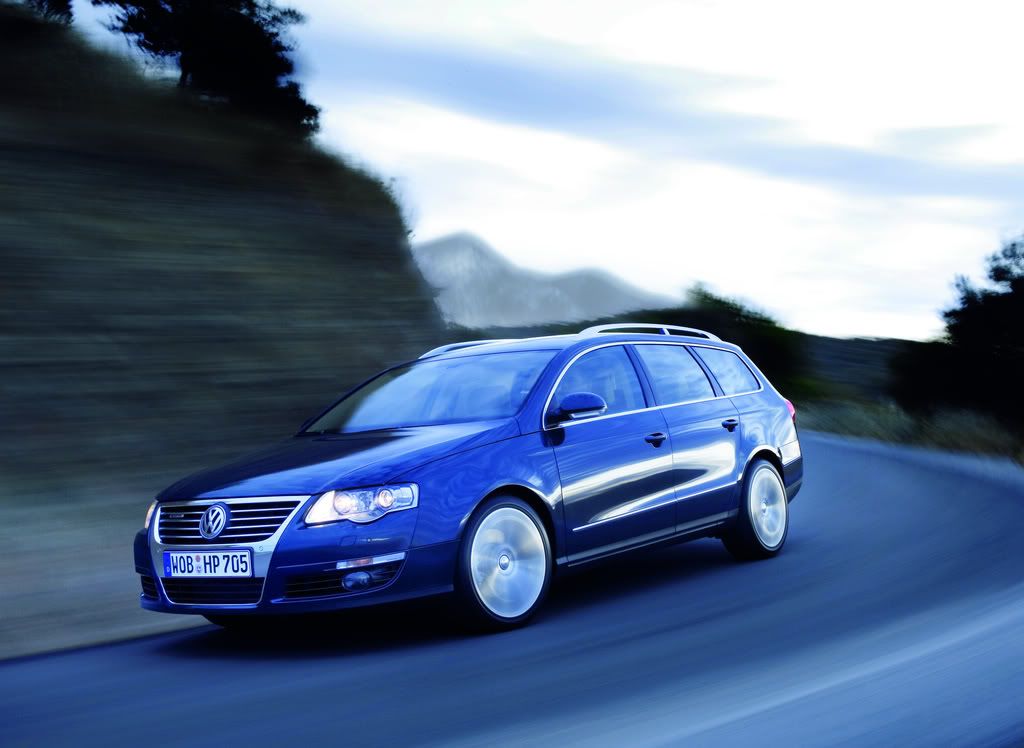
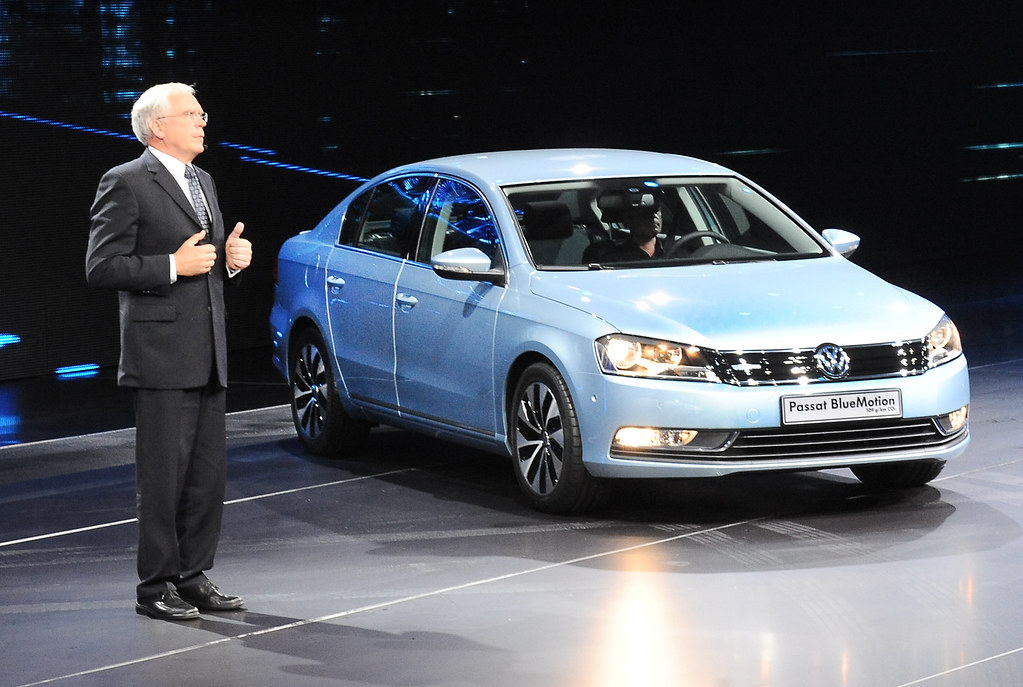
Passat BlueMotion


Source: Volkswagen Media Services
Image Source: UnitedPictures.com

Friday, September 25, 2009

Volkswagen Passat named Used Car of the Year by What Car?

Volkswagen has been honoured with two class victories and the Passat has been named overall Used Car of the Year by What Car? magazine.

The What Car? Used Car of the Year judging panel was made up of experts from all areas of the motor industry including car dealerships, auction houses and experts from What Car?

The 2005 five door Golf GTI claimed victory in the highly competitive Sports Car category, while the 2006 Passat 1.9-litre TDI S claimed victory in the Family Car category as well as the overall title of Used Car of the Year.

The Passat impressed the judges with its mix of value for money, reliability, driver involvement and high levels of comfort and safety features.

The Golf GTI was considered to be all things to all men; blending the practicality of a five seat hatchback with performance from the 2.0-litre 200 PS engine and high levels of equipment.

In addition to these category victories, a further six Volkswagen models were also shortlisted in their respective categories. The Polo BlueMotion 1.4-litre TDI (Green Car), Golf 1.6-litre FSI (Small Family Car), Touran 1.9-litre TDI SE (MPV), Passat Estate 1.9-litre TDI S (Estate), Touareg 2.5-litre TDI (SUV) and Phaeton 3.2-litre V6 (Executive) were all placed in the top five.

John French, National Used Car Manager for Volkswagen UK commented: ‘We are extremely proud to receive these awards from What Car? magazine. To win two categories and the overall title in such a competitive marketplace is fantastic and will be a real boost to our Retailer network.’

French continued: ‘It is also great to see so many other Volkswagen models included in the category shortlists. It is a real credit to Volkswagen’s consistent focus on build quality and reliability that we have so many models represented and they are perform so strongly.’

It’s not only the products which make Volkswagen a good used buy. Volkswagen also offers the Approved Used Programme, which allows customers to buy with complete peace of mind. All cars are sold with a multipoint check, history checks, up to 12 month’s warranty and breakdown assistance and a 30 day exchange plan.

Car News TV coverage of VW at IAA Frankfurt Motor Show 2009

Saturday, February 7, 2009

Not VW's New Midsize Sedan but Close !!!


Spy shot of 2010 Passat Lingyu

Chinese Automotive website Cheshi.com has spy shots of the Passat Lingyu facelift which is based on a stretched version of the Passat B5 platform measuring overall 4.78 metres in length.

As we can see from the image the 2010 model has being influenced by the Phaeton, with a cleaner grill and headlight treatment and new compact wing mirrors for better aerodynamics; this design could also provide vital design clues to Volkswagen's New Midsize Sedan to the US.

Shanghai Volkswagen is leading the development of New Midsize Sedan which will be produced in Shanghai and Chattanooga respectively.


Current Passat Lingyu produced since 2005

The 2010 Passat Lingyu will carry over the current engine range which comprises of a 2.0L 114hp/85kW with multi point injection, the evergreen 1.8T 148hp/110kW and the 2.8 V6 188hp/140kW.

The 2010 model will debut at the 2009 Shanghai Auto Show in April this year with production to start shortly after.


Image Source: Cheshi.com and Volkswagen

Monday, February 2, 2009

To the Point: BlueMotionTechnologies

A new umbrella brand for the world of efficiency

Wolfsburg, 02 February 2009 - Passat BlueMotion – new 110-PS TDI consumes just 4.9 liters

-Passat BlueTDI – new 143-PS TDI with SCR catalytic converter attains limits of Euro-6 standard

-Passat TSI EcoFuel – first car with direct-injection natural gas engine

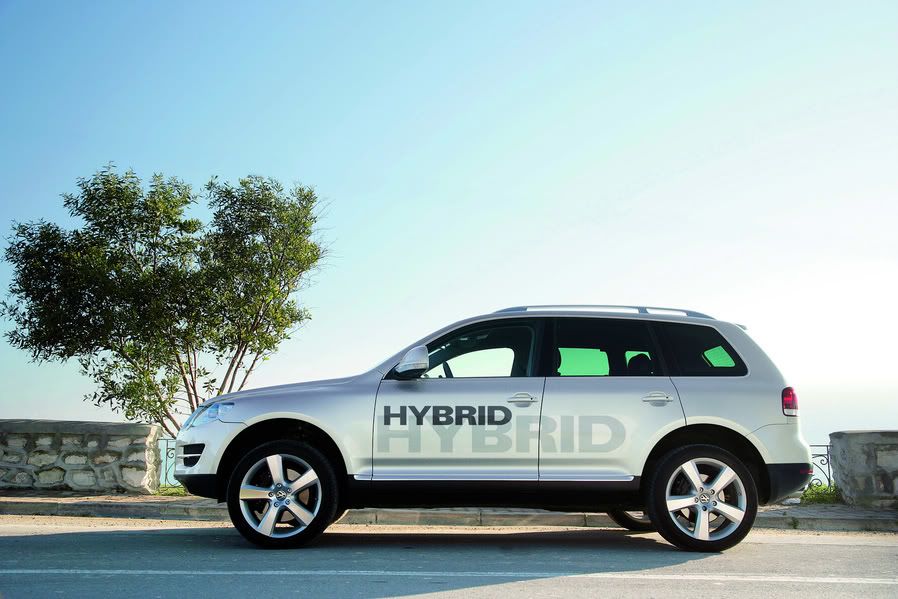
-Touareg Hybrid – new V6 TSI and E-motor drive consumption below 9 liters


In the first part of this year, Volkswagen will simultaneously launch three extremely fuel-efficient Passat versions with low emissions to the market: the second generation of the Passat BlueMotion, the Passat BlueTDI and the Passat TSI EcoFuel. Each of these new Passats represents an individual solution tailored to meet the challenges of our times. Volkswagen is presenting all three Passats under a new umbrella brand: BlueMotionTechnologies. This label covers all production-mature or near-production technologies and products that significantly reduce fuel consumption and CO2 emissions.

BlueMotionTechnologies These are developments such as the new start-stop system, regenerative braking and the highly innovative SCR catalytic converter and the NOx storage catalytic converter already implemented successfully in the USA electric drive and hybrid systems. Also included are the innovative drive systems of the new TSI EcoFuel. These technologies are proof that Volkswagen is once again leading the way with innovative, efficient and cost effective solutions for the future. Recent beginnings of this process can be seen in the Polo BlueMotion, which in 2006 was the first five-seater to reduce fuel consumption below 4.0 liters per 100 kilometers.

The extent of today’s BlueMotion range currently extends from this Polo to the Golf, Jetta, Caddy, Touran, Sharan, and up to the new Passat BlueMotion. A recent survey by the organization "Deutsche Automobil Treuhand DAT", the renowned and world’s oldest institution for automotive market research, demonstrates just how successful the BlueMotion label has become today. In a representative survey, the esteemed DAT found that 85 percent of German car drivers are familiar with the BlueMotion label. The next best competitor only attained a recognition level of 36 percent. This makes BlueMotion the number 1 among automotive environmental labels in Germany.

The term BlueMotionTechnologies does not define a fixed set of technologies but a range of continually evolving, innovative solutions. Under the same label, Volkswagen is offering an initial look at the prototype of the new Touareg Hybrid. The powertrain technology implemented here will go into production with the next generation Touareg. Average fuel consumption: less than 9.0 liters per 100 kilometers. CO2 emissions: less than 210 g/km. The countdown has already started for this car.

Representative of just how innovative BlueMotionTechnologies are in the 2009 product lineup, is the current Passat – a mid-class model that has long claimed a position as the most fuel efficient, cleanest and most economical car in its class.

Take the Passat BlueMotion, for example: Here a new common rail TDI (81 kW / 110 PS) delivers pioneering 4.9 liter average fuel consumption and CO2 emissions of just 128 g/km (Wagon: 129 g/km). The Passat BlueMotion has a start-stop system as standard equipment and attains the limits of the Euro-5 emissions standard that takes effect in September. Its range of over 1,400 kilometers on one tank of fuel is a sensation as well – travelers starting out in Berlin will not be looking for a gas station until shortly before Rome! This car is already being sold.

Consider the Passat BlueTDI. This diesel is far ahead of its time: it will be the first TDI launched by Volkswagen to attain the limits of the Euro-6 emissions standard that does not become law until 2014. Aboard the Passat BlueTDI, a so-called SCR catalytic converter reduces nitrogen oxides to a level below 80 mg/km. Production of the 105 kW / 143 PS Passat BlueTDI will ramp up at the beginning of March. Fuel consumption of the sedan with standard 6-speed transmission: 5.2 liters per 100 kilometers. This yields CO2 emissions of 137 g/km (Wagon: 5.5 liters per 100 kilometers / 144 g/km CO2). As an option, the Passat BlueTDI is available with a 6-speed DSG. The Passat BlueTDI is positioned above the Passat BlueMotion due to its greater power and more sophisticated emissions control system.

Take the example of the Passat TSI EcoFuel: The TSI EcoFuel, boosted by supercharger and turbocharger, revolutionizes the world of cars powered by natural gas. Never before has there been a natural gas vehicle with this kind of dynamic performance that is so fuel efficient and clean. The Passat TSI EcoFuel breaks the 120 gram CO2 barrier. In natural gas mode its driver pays less than 4.25 Euros* per 100 kilometers; and its engine – with 110 kW / 150 PS – delivers precisely the type of performance one would want in a highly comfortable travel car like the Passat.

Touareg V6 TSI Hybrid in detail – prototype with near-production technology
The Touareg Hybrid prototype being demonstrated incorporates many features of the production vehicle of tomorrow. The car is powered by a new V6 TSI – a highly advanced configuration of a direct injection gasoline engine boosted by a mechanically-driven supercharger – in tandem with an electric motor. It features a newly developed 8-speed automatic transmission. Volkswagen is implementing a parallel hybrid drive on the future Touareg V6 TSI Hybrid. The SUV is able to offer a state-of-the-art all-wheel drive system and up to 3.5 metric tons towing capacity in this version too.

The V6 TSI on the Touareg is clearly happy at high revs and exhibits agile response. It delivers 245 kW / 333 PS. This places the TSI at the same power level as an eight cylinder engine, yet it is considerably more fuel efficient. When used in the hybrid drive, fuel consumption of less than 9.0 liters of fuel per 100 kilometers is attained. The electric motor installed between the V6 TSI and the 8-speed automatic transmission delivers a maximum power of 38 kW / 52 PS. In boosting mode – where maximum torque and power are required, the V6 TSI engine and the electric motor operate together (by kickdown or gearshift selector in "S" position). Under these conditions, a temporary maximum power of 275 kW / 374 PS is available with a maximum torque of 550 Newton-meter. However, it should be stated that the system is primarily designed for excellent fuel consumptions and emissions and that the availability of temporary high performance is just a welcome side benefit.

Passat BlueMotion in detail – the most fuel efficient Passat of all times
BlueMotion is the Volkswagen label for the most fuel efficient cars of the brand. The BlueMotion version of the large Passat is especially successful. That is why Volkswagen is launching its second generation of BlueMotion cars with this model. Dealers are already making first deliveries of the new Passat BlueMotion. This Volkswagen – offered as a sedan or wagon – is now powered by a new highly advanced version of the common rail turbo-diesel with 81 kW / 110 PS. Aboard the Passat BlueMotion, as mentioned, the engine consumes only 4.9 liters fuel per 100 kilometers; accordingly, its CO2 emissions are also low at 128 g/km (Wagon: 129 g/km).

In addition, a start-stop system is being implemented that is highly effective, especially in city driving. Also new in the technology package of the most fuel efficient Passat of all times: longer gear ratios, low-friction drive shafts, super reduced rolling resistance tires and extra lightweight wheels made of flow-formed steel. The material thickness of these wheels is lower in certain sections to save on weight. The BlueMotion package can be ordered in combination with one of the four equipment variants Trendline, Comfortline, Highline or Sportline. Always included: the particulate filter.

Passat BlueTDI in detail – the cleanest Passat TDI of all times
In just a few weeks, the Passat BlueTDI will be launched on initial European markets, serving as a frontrunner for an entirely new series of pioneering BlueTDI models. This new model already attains the limits of the Euro-6 emission standard that does not take effect until the year 2014.

A highly sophisticated SCR catalytic converter – together with the additive AdBlue – ensures significant reduction of nitrogen oxides in the exhaust gases. The acronym SCR stands for "Selective Catalytic Reduction". "Selective" refers to the fact that this catalytic converter selectively converts nitrogen oxide (NOx) components in the exhaust into nitrogen and water without forming undesirable by-products. This makes the Passat BlueTDI the most environmentally-friendly diesel production car in the world.

Technically speaking, the Passat BlueTDI is based on the 103 kW / 140 PS, 2.0 liter common rail engine. However, the BlueTDI develops 105 kW / 143 PS and despite the slight increase in power, it consumes up to 0.4 liter less than the conventional TDI, depending on body version. On the Passat Wagon BlueTDI, fuel consumption is 5.5 liters per 100 kilometers (144 g/km CO2); on the sedan it is 5.2 liters (137 g/km CO2).

Passat TSI EcoFuel in detail – the most dynamic natural gas car of all times
The Passat TSI EcoFuel is ushering in a new era of cars powered by natural gas. Until now, one of the drawbacks of cars powered by natural gas – a fuel that is as environmentally-friendly as it is economical – has been that performance can be rather unexciting. Thanks to its advanced, 110 kW / 150 PS engine, the Passat TSI EcoFuel combines a maximum speed of 210 km/h with excellent fuel consumption and finally puts an end to the myth that natural gas cars are slow.. The natural gas powered Passat accelerates to 100 km/h in just 9.7 seconds.

Despite its great agility, the world’s first turbocharged and supercharged direct-injection engine configured for natural gas operation in the Passat, and equipped with a 7-speed dual clutch transmission (DSG) it requires just 4.4 kilograms (!) of natural gas per 100 kilometers (cost point: just 4.25 Euros* / 100 km). At 119 g/km CO2, the Passat breaks the 120 g/km CO2 barrier. Market launch for both the Passat and Passat Wagon TSI EcoFuel is already scheduled for the first part of 2009.

BlueMotionTechnologies – Volkswagen presents a new world of efficiency


Wolfsburg, 02 February 2009 - BlueMotionTechnologies bundles Volkswagen’s best environmental technologies of today to fulfill the automotive aspirations of tomorrow. These are developments such as the new start-stop system and energy recovery by regenerative braking, electric drives and hybrid systems as well as clever drive systems like the one in the new TSI EcoFuel. To the point: its aim is no less than to bring the cleanest and most economical cars to the streets.

Today, BlueMotionTechnologies are already being launched on the market in three extremely fuel efficient and clean Passat versions: Blue­Motion with fuel consumption under 5 liters, EU-6 conformance in the BlueTDI, and the TSI EcoFuel that emits just 119 g/km CO2. Consider these examples:


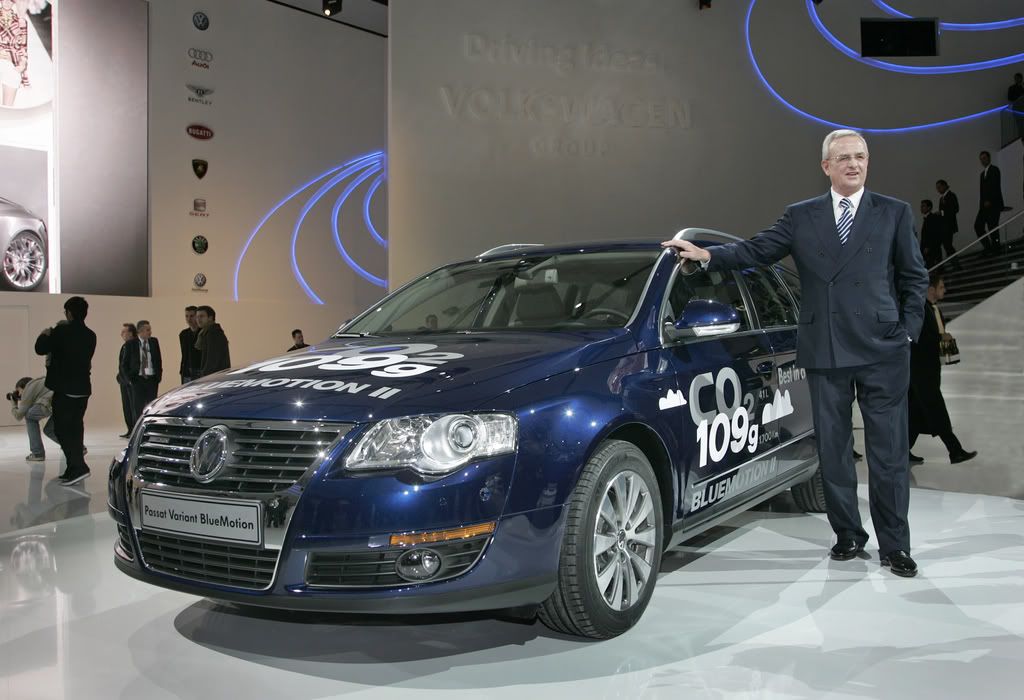
Passat BlueMotion II

Passat BlueMotion: Here a common rail TDI (81 kW/110 PS) provides for 4.9 liter fuel consumption and CO2 emissions of just 128 g/km. The Passat BlueMotion (starting at 26,750 €) has a Start-Stop system and conforms to limits of the Euro-5 emissions standard. Its range of over 1,400 kilometers on one tank of fuel is a minor sensation – travelers starting out in Berlin will not be looking for a gas station until shortly before Rome. Naturally, the Passat BlueMotion will also be available as a wagon (starting at € 27,900).


Passat BlueTDI

Passat BlueTDI: Its 105-kW diesel is ahead of its times; that is because Volkswagen is introducing the first TDI to conform to limits of the Euro-6 emissions standard that does not take effect until 2014. Aboard the Passat BlueTDI (starting at € 29,225), a SCR catalytic converter reduces nitrogen oxides to less than 80 mg/km. Fuel economy of the sedan shifted by a 6-speed gearbox: 5.2 liter/100-km (CO2 emissions: 137 g/km). Further options: the “BlueTDI” will also be available as a wagon (starting at € 30,375), and it will be available with a 6-speed DSG.

Passat TSI EcoFuel: The Passat TSI EcoFuel is ushering in a new era of cars powered by natural gas. Until now, one of the drawbacks of cars powered by natural gas is that their performance can be rather unexciting. Thanks to its 110 kW strong high-tech engine, the Passat TSI EcoFuel combines a maximum speed of 210 km/h with excellent fuel economy and finally puts an end to these limitations. The car accelerates to 100 km/h in just 9.7 seconds. Despite its great agility, the world’s first turbocharged and supercharged direct-injection engine configured for natural gas operation is satisfied with just 4.4 kilograms of natural gas, which is about € 4.25 per 100 kilometers. With a 7-speed DSG, the Passat breaks the magic CO2 limit of 120 g/km in this class (6-speed transmission: 4.5 kg/100-km and 123 g/km CO2). If the natural gas on board should run low before the next fill-up station, the engine controller switches over to gasoline mode. The car has a total range of more than 900 kilometers. The Passat TSI EcoFuel will be offered at a starting price of € 29,975; on the Wagon it is € 31,125.


Touareg V6 TSI Hybrid

Touareg V6 TSI Hybrid. Because the future of the automobile – and Blue­MotionTechnologies as well – offers more than just one answer, in parallel Volkswagen is presenting a prototype of the future Touareg V6 TSI Hybrid (333 PS / under 9.0 l/100 km). This car will enter production in 2010 as the world’s first hybrid SUV to have 3.5 metric ton towing capacity. Volkswagen is introducing one of the highest performance parallel hybrid systems in the world in this SUV. The German carmaker is utilizing a high-tech alliance of a V6 TSI (245 kW) boosted by supercharger and an electric motor (38 kW). Up to a speed of 50 km/h, the Touareg V6 TSI Hybrid can be driven by just the electric motor. In this case, no emissions are generated.

Wednesday, October 1, 2008

Paris 2008: World premiere of the second Passat BlueMotion generation


-New engine: 110 PS strong common rail TDI consumes just 4.9 Liter*

-Automatic Start/Stop: Engine automatically shuts down when car is stopped

Wolfsburg / Paris, 01 October 2008
BlueMotion is the Volkswagen label for the brand’s most economical cars. All BlueMotion models – from the Polo to the Passat – share this quality: their fuel-saving technology is absolutely affordable. The Passat is especially successful as a BlueMotion version. That is why Volkswagen is launching the second generation of BlueMotion technology on this model. The first Passat BlueMotion “2” cars will already arrive at dealers sometime this year. The new version of the Passat BlueMotion, once again offered as a sedan and Variant wagon, is powered by a highly advanced common rail turbo-diesel. It consumes just 4.9 liters* of fuel per 100 kilometers when powering the Passat BlueMotion sedan; accordingly, its CO2 emissions are also low at 128 g/km (* = Variant: 4.9 liters and 129 g/km).

New Automatic Start/Stop
Furthermore, an Automatic Start/Stop system is being used that is highly effective especially in city driving. Also new on board the most economical Passat of all times: low-friction propshafts, so-called super “rowi” tires (rollwiderstandsre¬duziert = reduced roll resistance) and very light wheels made of a light flow-forming steel. The material thickness of these wheels is less in certain areas to save on weight. The Blue¬Motion technology package can be ordered in combination with the four equipment variants Trendline, Comfortline, Highline and Sportline. Always included: the diesel particulate filter.

New 2.0 TDI consumes just 4.9 liters
The 2.0 liter displacement common rail TDI of the Passat BlueMotion develops a power of 81 kW / 110 PS (at 4,200 rpm) and replaces the 1.9 TDI with 77 kW / 105 PS. Its maximum torque of 250 Newton-meters is available from 1,500 rpm. Engine power is directed to a manual 5-speed transmission. Meanwhile, the proven gear recommendation was adopted; it is integrated in the standard multifunctional display.

Fuel consumption was successfully reduced by changing over to the new TDI and the Automatic Start/Stop system. It is now just 4.9 liters instead of 5.1 liters per 100 kilometers (sedan figures). Similarly, the low CO2 emissions of 136 g/km, already pioneering, were reduced to 129 g/km. The new Passat BlueMotion satisfies the Euro-5 emissions standard that takes effect in September 2009 and attains a top speed of 198 km/h (Variant 196 km/h).

Operation of Automatic Start/Stop is fully intuitive
Interesting is a look at the new Automatic Start/Stop system’s functionality. It is intuitive in operation and after just a few kilometers it becomes as natural a part of car driving as shifting or steering.

The driver drives to a red traffic light, brakes the Passat BlueMotion to a stop, shifts to neutral (ideally this is also done without the system) and takes the foot off the clutch. This causes the engine to be stopped momentarily. The message “Start Stop” now appears on the multifunctional display. As soon as the traffic light shows amber before green, the driver pushes the clutch, the engine starts, the “Start Stop” display goes out, and the drive continues. Essentially, the driver does not need to perform any extra operating steps compared to a conventional car, but in city driving Automatic Start/Stop can save up to 0,2 liters of fuel per 100 kilometers.

Paris 2008: BlueTDI – World premiere of the cleanest Passat of all times


-Passat BlueMotion with SCR catalytic converter already fulfills Euro-6 standard

-143 PS strong Passat BlueTDI to arrive on market early in 2009

Wolfsburg / Paris, 01 October 2008
In a world premiere at the Paris Motor Show, Volkswagen is presenting the cleanest Passat of all times and with it a new engine label: BlueTDI. The Passat BlueTDI should already be launched in the first European markets in 2009, as a sedan and as a Variant. It is a harbinger of a whole series of innovative BlueTDI models to come. They fulfill the most stringent emissions standards in the USA (“BIN5”) and Europe (Euro-6 standard for the year 2014). They are Volkswagens that are once again doing great credit to the quality seal “Made in Germany”.

SCR catalytic converter and AdBlue are the keys to fulfilling the Euro-6 standard
In the case of the Passat Variant BlueTDI being shown in Paris, a highly complex SCR catalytic converter together with the additive AdBlue serve to significantly reduce nitrogen oxide emissions in the exhaust. The acronym SCR stands for “Selective Catalytic Reduction”, an internationally recognized term. “Selective” refers to the fact that this catalytic converter has a very special task: its purpose is to selectively convert nitrogen oxide (NOx) components of the exhaust stream to nitrogen and water without forming undesirable side products.

The SCR catalytic converter was developed precisely for this highly specialized task. However, the car will continue to have an oxidation catalytic converter and diesel particulate filter on board to reduce the full spectrum of emissions.

Technically, the BlueTDI of the Passat is based on the 103 kW / 140 PS strong 2.0 liter common rail engine. The BlueTDI, however, develops a power of 105 kW / 143 PS. Despite the slight performance gain, the Passat BlueTDI consumes up to 0.3 liter less than the conventional TDI, depending on the body version. In the case of the Passat Variant BlueTDI, fuel consumption is 5.5 liter per 100 kilometers (144 g/km CO2); for the sedan the value is 5.2 liter (137 g/km CO2). Power transmission is via a 6-speed manual transmission. As an option, after the production launch there will also be a Passat Blue TDI with 6-speed DSG (most efficient auto¬matic in the world). The Passat BlueTDI will essentially be offered in all familiar equipment versions.

BlueTDI – the technology in detail
The most important technical building blocks of the BlueTDI system are the SCR catalytic converter and the AdBlue additive for reducing nitrogen oxides. Conversion of the nitrogen oxides is accomplished using a synthetically produced, water-based urea solution: AdBlue. This substance consists of 32.5 percent urea and is continuously sprayed into the exhaust gas upstream of the SCR catalytic converter. It is stored in an auxiliary tank. It is metered according to the mass flow rate of the exhaust gas; engine management – informed by a NOx sensor downstream of the SCR catalytic converter –controls the process precisely.

Atomized into a fine vapor through a screen, the urea is converted in the hot exhaust gas upstream of the catalytic converter. In the SCR catalytic converter, it reacts with the nitrogen oxides and splits them – as mentioned – into nitrogen and water. The water-based AdBlue additive is nontoxic, odor-free and biodegradable. AdBlue consumption will be about 0.1 liter per 100 kilometers on average. Plans call for refilling as part of each regular service cycle.

Wednesday, September 24, 2008

Paris 2008: World Premiere of BlueTDI label


At the 2008 Paris Motor Show Volkswagen will show its new BlueTDI engine label that meets the stringent Euro 6 emissions rating which comes to effect in 2014.

Thanks to technologies such as SCR, AdBlue and Common Rail the BlueTDI has a fuel consumption that is 0.6L better than the current 2.0 TDI; in the Passat Variant it gets 5.5 l/100 km (144 g/km CO2) and the Passat Sedan gets 5.2 l/100 km (139 g/km CO2).

The engine has 143hp (105kW) and is optioned with DSG or 6 speed manual.

Expect BlueTDI to hit the market in 2009.

Editor Note: BlueTDI will debut at the LA Auto Show In the Touareg this October.