Sunday, October 3, 2010

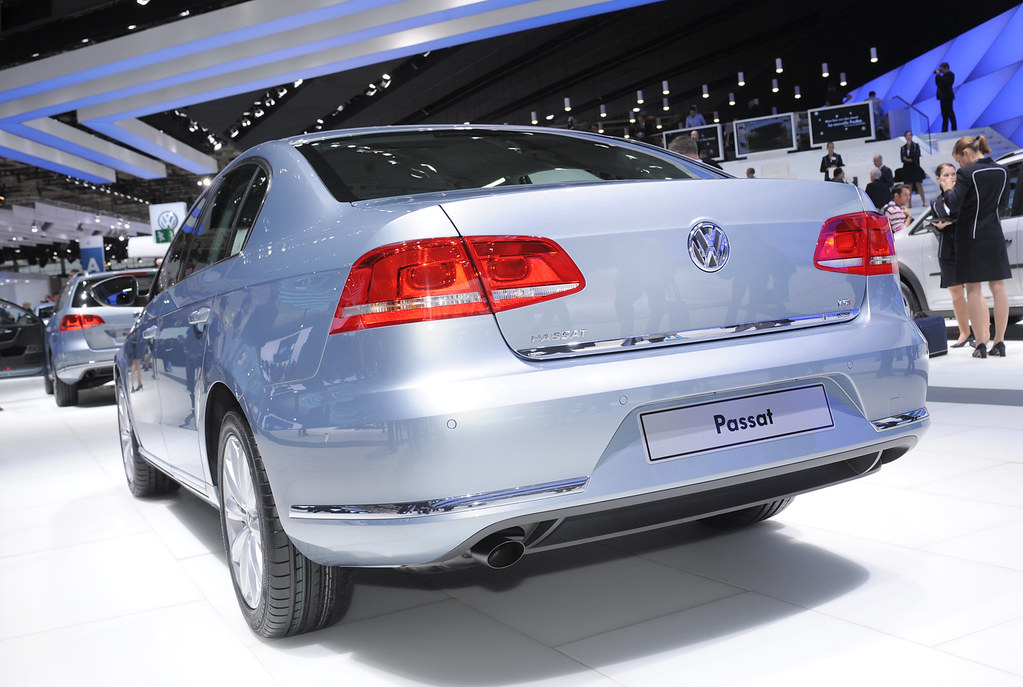
Passat Live Images from Paris Auto Show 2010


World Premiere of the New Passat:
4.2* litre per 100 km fuel economy and a front end in the style of the Phaeton


• 7th generation Passat has new styling and extremely fuel-efficient engines

• Assistance systems and quality match those of a higher vehicle class

Wolfsburg / Paris, 29 September 2010 - The Passat from Volkswagen represents one of the very great success stories in automotive history, with over 15 million cars sold since the Passat was first launched in 1973. It is now available in over 100 countries across the globe. Now, at the Mondial de l’Automobile in Paris (October 2-17), Volkswagen is presenting the world premiere of an entirely new Passat – as a saloon and an estate car simultaneously. The seventh generation of this bestseller will be available in initial European markets starting as soon as mid-November.


To the point – upper class flair in a mid-class car
The fifth and sixth Passat generations had already left conventional class boundaries behind and bridged a path to the next higher segment with their high-end features. The seventh generation Passat emphatically continues this trend. A completely new styling configuration was created; its front-end styling follows that of the Phaeton which was restyled mid-year. It simultaneously guides the Passat’s independent design into the future. Without leaving the mid-class in terms of pricing, the Passat approaches the top segments even more powerfully with its upgraded comfort, convenience, quality and safety properties as well as in its assistance systems. In fact, the Passat - available in Trendline, Comfortline and Highline equipment levels - now offers more value thanks to its optimised features. For example, standard equipment on all turbodiesel models of the base Trendline version now includes the energy-saving Stop/Start system and battery regeneration. All other petrol and natural gas engines have a battery regeneration system as well. For the smallest petrol engine, battery regeneration and the Stop/Start system are available as options.

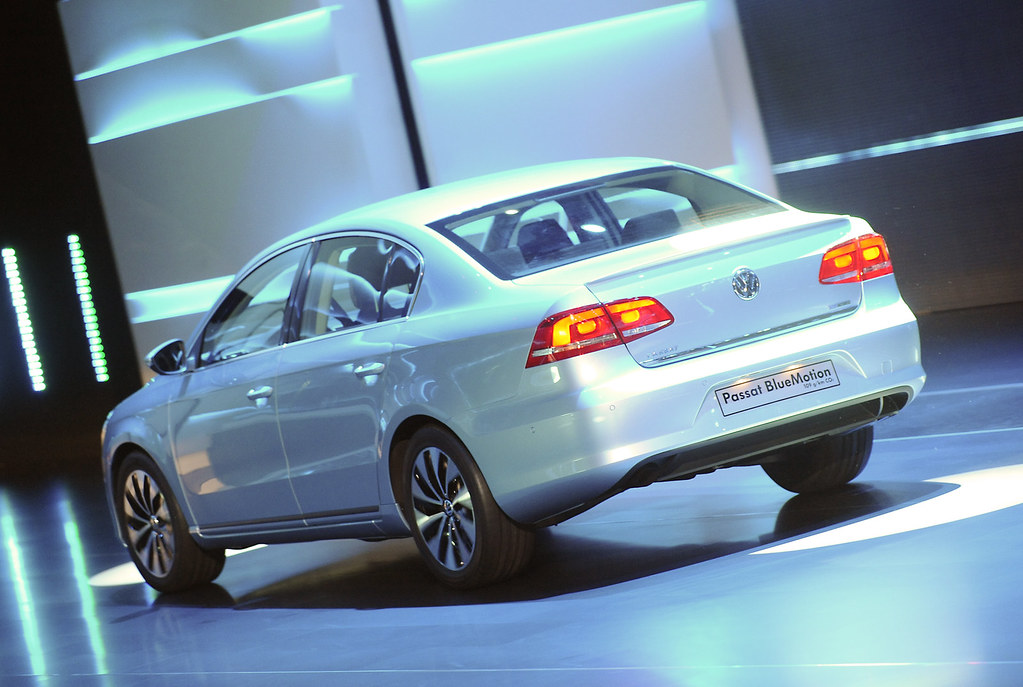
Up to 18 percent improved fuel economy: As is usual for a Volkswagen, the new Passat also sets standards in sustainability. All ten engines (77 kW / 105 PS through 220 kW / 300 PS) are more fuel efficient – up to 18 percent more. The "smallest" and yet torque-strong turbodiesel (1.6 TDI with 105 PS and 250 Nm) now consumes just 4.2* l/100 km; that is equivalent to 109* g/km CO2. Meanwhile, downsizing and technologies such as the Stop/Start system contribute to extraordinary fuel efficiency in the petrol-powered versions. Pioneering here is the 1.4 TSI (90 kW / 122 PS); in the BlueMotion Technology version, it only consumes 5.8 l/100 km. The equivalent CO2 value is 138 g/km.

New safety features: Volkswagen is making genuine progress in the area of safety. The previous model already attained an impressive five stars in Euro-NCAP crash testing. The new model takes safety to a new level with features such as an automatic City emergency braking function and, on Comfortline models and above, a standard fatigue detection function. As a component of the optional automatic ACC adaptive cruise control system, in worst case scenarios the emergency braking function reacts independently at speeds below 30 km/h. So, it can help prevent frontal collisions. The fatigue detection system, which Volkswagen is introducing for the first time in this class, is continually active; it detects reduced driver concentration and warns the driver with an acoustic signal; a visual message also appears in the instrument cluster recommending that the driver should take a break from driving.

Another new feature on the Passat: the continually active masked main beam headlights known as Dynamic Light Assist; this is the same system as the one first introduced on the new Touareg. Dynamic Light Assist – an option offered in conjunction with bi-xenon headlights - enables continual use of the main beam headlights while driving. Via a camera, the system detects oncoming traffic and cars driving ahead and automatically masks only those lighting areas relevant to glare. The results: improved illumination of the carriageway in nearly all situations. The Passat is the first car in its class to have this system. For vehicles with conventional halogen headlights, a simpler version of automatic main beam control is available: Light Assist. A camera is also used here, e.g. to detect oncoming traffic. But the system switches over completely between main beam and dipped beam. As soon as there is no more oncoming traffic, the main beam is reactivated.

The XDS electronic transverse differential lock - first introduced on the Golf GTI - improves traction in bends. Along with Lane Assist (lane keeping assistant), which was also available in the previous model, there will now also be a Side Assist function, which uses flashing LEDs in the door mirrors to call the driver’s attention to vehicles located laterally to the rear or next to the Passat or a vehicle approaching quickly from the rear. A new, direct measuring tyre pressure monitoring system also signals potential loss of tyre pressure - individually for each wheel. The pressures of all tyres may also be displayed in the instrument cluster.

Innovative convenience systems: Other new assistance systems are essentially convenience oriented, and they significantly simplify everyday driving. They include Easy Open: If the new Passat saloon is equipped with Keyless Access (automatic locking and engine starting system), a specific foot motion behind the vehicle is sufficient to cause the boot lid to open. Anyone who has stood next to a car with both hands full knows know helpful a function like Easy Open can be. Naturally, the boot lid only opens for someone who is carrying the proper RF identification fob for the Passat. The human-machine interface here is a sensor located in the bumper area.

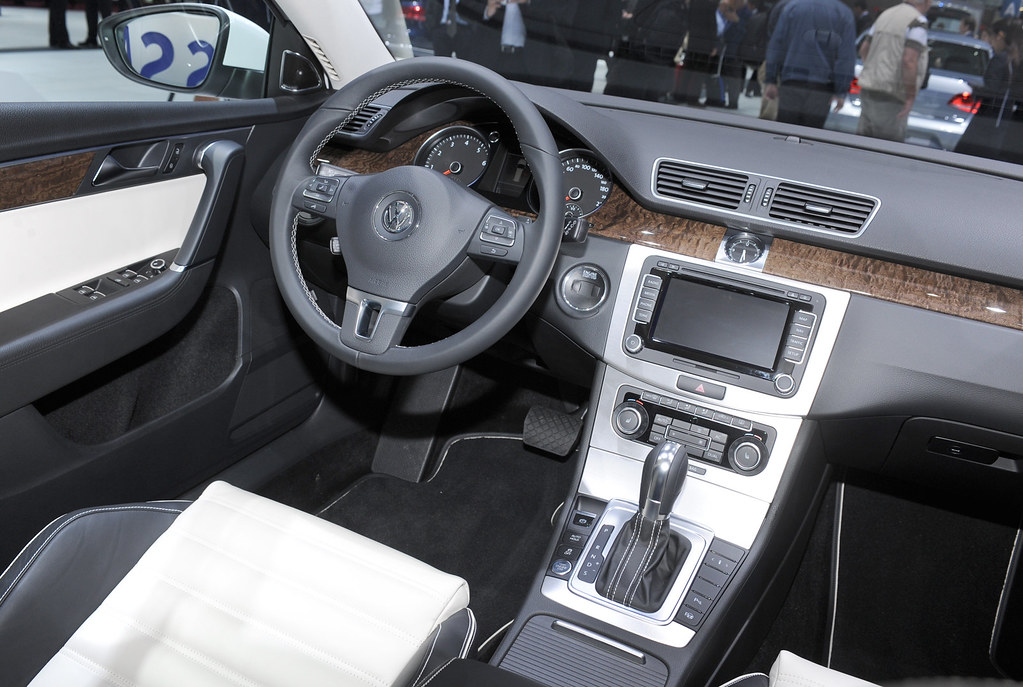
Also new in the Passat: The rear seat system that can be unlatched from the bootspace, a towbar that can be made to swivel out at the press of a button and side windows in noise-dampening compound safety glass. As in the new Sharan, Park Assist II will now also be offered on the Passat; this system not only can steer into parking spaces parallel to the carriageway; it can also find its way into parking spaces perpendicular to it. Last but not least, the Passat’s RNS 510 navigation system detects speed limit signs by camera and sends them to the touchscreen in the centre console.

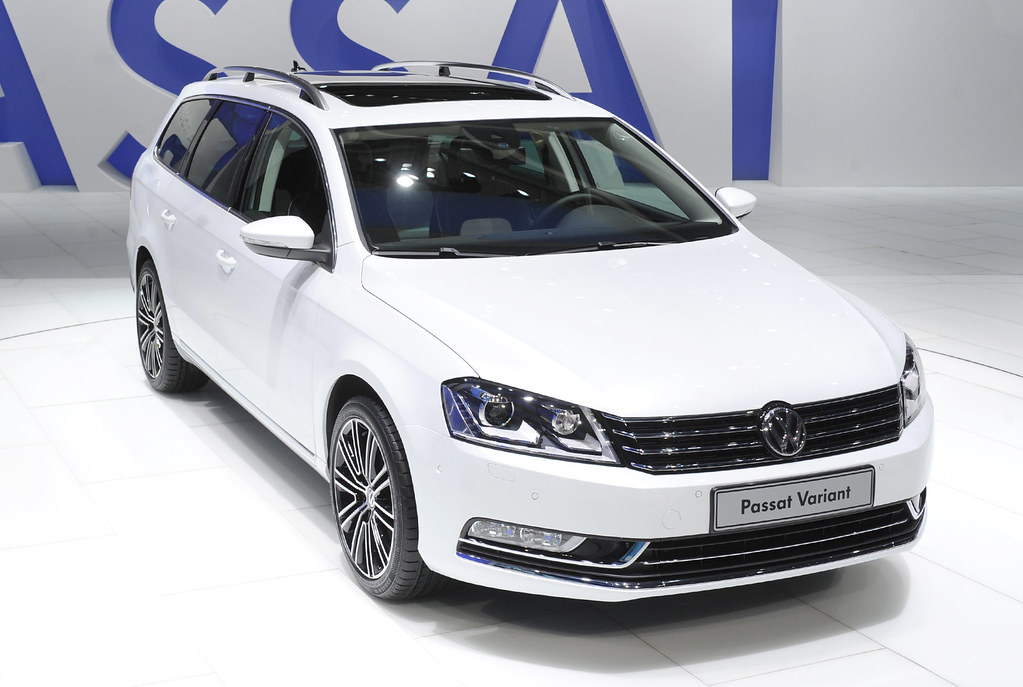
Passat Variant Exclusive Concept
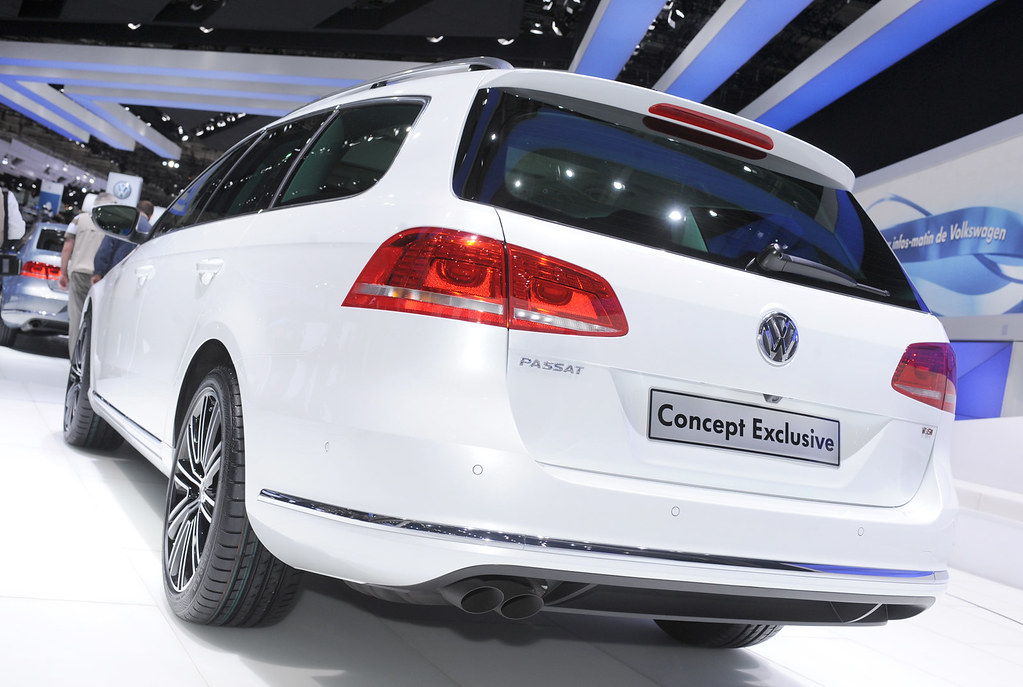


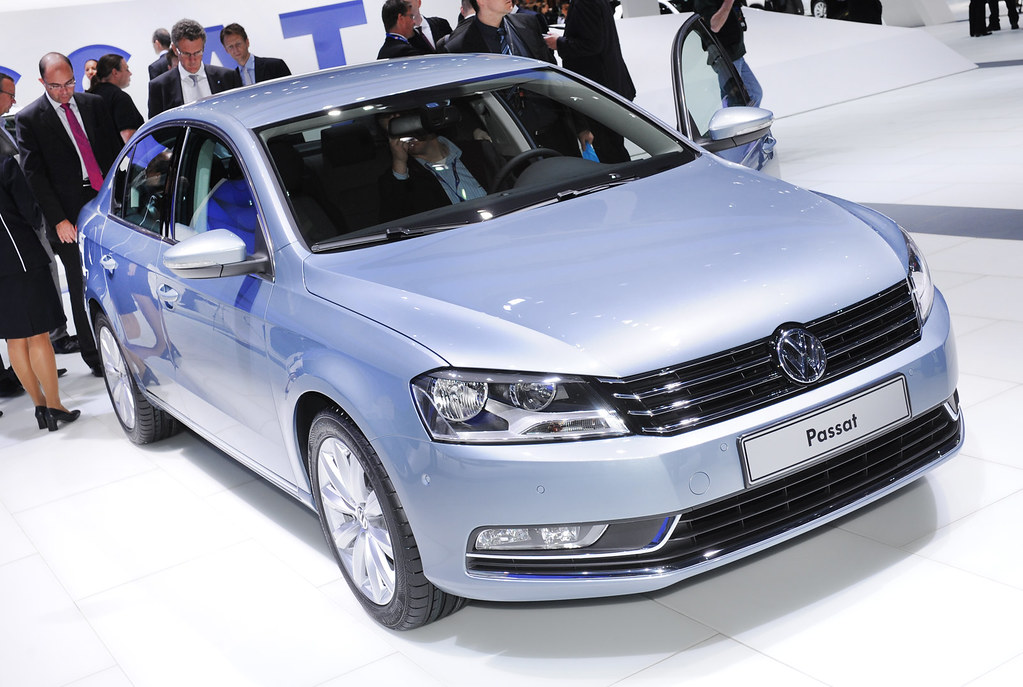
Passat TSI with BlueMotion Technology


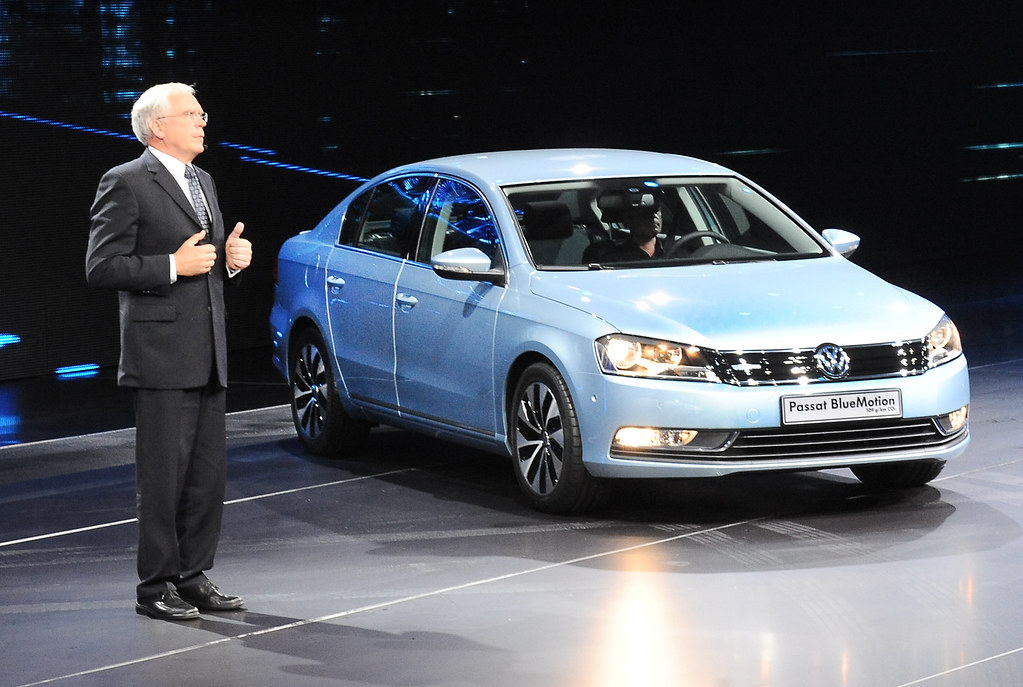
Passat BlueMotion


Source: Volkswagen Media Services
Image Source: UnitedPictures.com

Amarok SingleCab premieres at the IAA in Hanover

Pickup now also with single cab: Amarok SingleCab premieres at the IAA in
Hanover


• Amarok with single cab and longer cargo bed for rugged
work
• Comfortable single cab provides more space than usual

Hanover, 21st September 2010 - Following the internationally successful launch of the double cab Amarok, Volkswagen Commercial Vehicles is now unveiling at the 63rd Commercial Vehicles IAA in Hanover (23rd to 30th September) the second Amarok variant: an Amarok with a shorter cab and longer cargo bed. The Amarok SingleCab is a classic ‘workhorse’ pickup.

Compared to the Amarok with four-door double cab, the Amarok SingleCab, while having the same vehicle length, provides a cargo bed that is 2,205 millimetres long and thus 65 centimetres longer. It can comfortably take two Euro pallets loaded sideways one behind the other and still leave a further 60 centimetres of storage space spare. With an unchanged loading gap of 1.22 metres between the wheel arches, the cargo bed provides a total load area of 3.57m2, while six load-lashing rings, fitted as standard, enable even large and bulky items to be transported safely.

Pickups with a single cab are regarded as the classic ‘workhorse’ for tough jobs in the manual trades, construction and agriculture. What counts above all else in these areas of work is the size of the load space. However, the engineers at Volkswagen Commercial Vehicles placed great importance on creating adequate space for the vehicle’s occupants as well. The single cab is therefore longer than on competitors’ models, enabling valuable items to be easily stored behind the two front seats.

The Amarok SingleCab is powered by the familiar 2.0-litre TDI engine (delivering 120kW / 163PS) or by the 90 kW / 122 PS TDI version now being unveiled for the first time. For power transmission customers can choose rear-wheel drive or switchable four-wheel drive with gear reduction. A differential lock on the rear axle is available as an option for both versions. The heavy-duty suspension enables the vehicle to carry a maximum load of up to 1.26 tons. Safety remains as ever at a high level. This includes ESP as standard, front airbags for driver and passenger and side airbags.

In addition to the classic commercial vehicle variant with black bumpers, a style pack is available for the SingleCab that includes bumpers in the vehicle body colour, 18 or 19-inch alloy wheels and an extensive array of further special features extending all the way to a premium navigation system. The classic workhorse can thus be pepped up into a lifestyle pickup.

The Amarok SingleCab will be launched in the first half of 2011.

Source: Volkswagen Commercial Vehicles

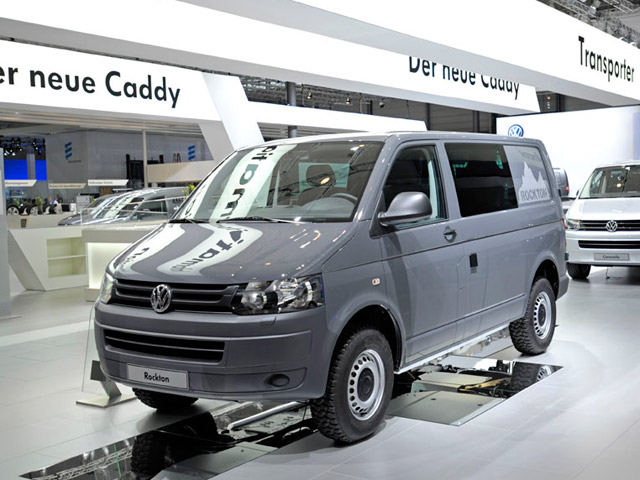
New Transporter Rockton masters the toughest ground

Four-wheel drive specialist: New Transporter Rockton masters the toughest ground


• New Volkswagen Commercial Vehicles all-rounder with
many uses on made and unmade roads
• With expedition pack, ready for any great adventure

Hanover 21st September 2010 – A van for use on tough terrain and for transporting man and materials to locations that are difficult to reach – it is for these extreme demands that Volkswagen Commercial Vehicles has now developed the Transporter Rockton. Building contractors, railway construction firms, mountain rescue teams and many others need a vehicle that can be flexibly adapted to their needs – and that is tough into the bargain.

The Rockton has been specifically designed to meet the sometimes extreme requirements of these target groups and, thanks to excellent traction, it thus fulfils the challenging demands of such customers to be able to transport material even in critical situations.

The Rockton is based on the Transporter Kombi, but by virtue of its standard 4-wheel drive has more grip on unmade roads. The permanent 4MOTION four-wheel drive with a 4th generation Haldex clutch, a differential lock as standard on the rear axle, height raised by 30 millimetres and strengthened suspension and shock absorbers (3.2-ton chassis) enable the vehicle to take its passengers and cargo reliably through almost impassable terrain. The Rockton even takes gradients of up to 36 degrees comfortably in its stride.

In addition to the raised height, the Transporter Rockton is also identifiable externally by the lack of rear side windows and its special livery. Inside the Rockton offers all of the special features of the Transporter Kombi, including, for instance, various different types of bench-style backseat. The Transporter Rockton is available with either of two powerful and fuelefficient 2.0-litre TDI engines, delivering 103 and 132 kW (140 / 180 PS) respectively and has a six-speed manual gearbox as standard. Furthermore all engine variants comply with the Euro 5 emission limits.

For extreme off-road use there’s the ‘Expedition Pack’, which makes the Transporter Rockton ready to set off on any great adventure. Noticeable externally are the 16-inch AT tyres on strengthened steel wheels. The main changes, however, come in the detail: a particular feature of this version is a special gearbox that provides increased traction in off-road mode. And even though the Rockton has been tailored to the special conditions of off-road motoring, it is fully suited to road use as well. For use away from made-up roads undercarriage protection elements shield the engine, gearbox, tank, sills, rear-axle differential and main exhaust silencer.

Another detail feature is the robust floor track system in the passenger compartment, to which two individual seats with sturdy fabric covers are secured. Both seats are equipped with an integral three-point safety belt and can be moved along the tracks or taken out. In addition, the Business Unit also provides further special equipment options. The new Transporter Rockton, which will be available to order from the end of the year, can thus be adapted to almost any use.

Source: Volkswagen Commercial Vehicles

‘Edition25’ Multivan for the top seller’s birthday

Special sporty model: ‘Edition25’ Multivan for the top seller’s birthday


• The first Multivan was built 25 years ago
• Black touches give the special model a dramatic look

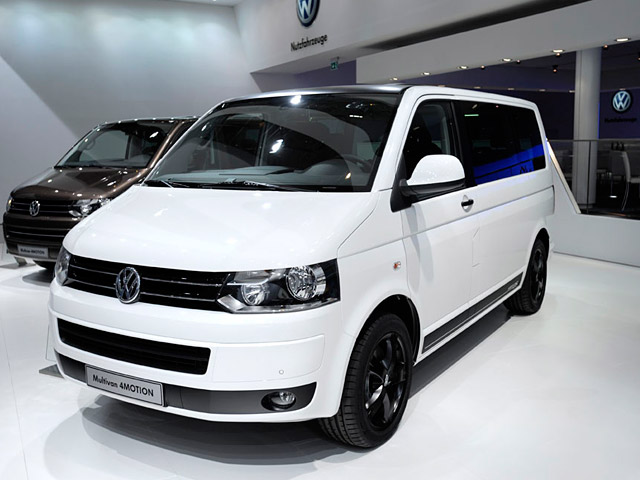
Hanover, 21st September 2010 – The year 1985: then just 17 years old, Boris Becker becomes the first German to win the Men’s Final at Wimbledon, ‘Rock am Ring’ takes place for the first time and Volkswagen Commercial Vehicles builds the first Multivan. The Multivan concept closes the gap between the working day and the weekend – the highly versatile MPV is born! Fittingly for the Multivan’s 25th anniversary, Volkswagen Commercial Vehicles is now launching a special model.

This special model is based on the current Multivan Comfortline, but offers even more finesse. It will only be available, for instance, in Candy White, Salsa Red or Metallic Silver so that the planned special touches are shown off to best effect. The model can be recognised above all by its matt black roof and black 18-inch alloy wheels. Further features include: black handles on driver and front passenger doors; a black B-pillar; black decal trim on the back of the vehicle and the side sills; and matt black paintwork on the bottom part of the front bumper.

The height-adjustable, ergonomic seats for driver and front passenger and the individually adjustable, sliding rows of seats in the back enable passengers to enjoy the high level of comfort that they are used to in a Multivan. The height and angle of the multifunctional leather steering wheel can be adjusted, thus guaranteeing driving comfort for drivers of all heights. The ‘RCD 310’ radio fitted as standard in the special model has a total of eight loudspeakers, plays MP3 files and includes a digital radio (DAB) receiver.

The ‘Side Assist’ lane-changing aid identifies any vehicles in an area critical to the process of changing lane. LED lights in the wing mirrors provide signals to alert the driver to the potential danger. This system, complete with cruise control, is standard on the special ‘Edition25’ model. The model’s feature set also includes an automatic anti-glare rear-view mirror: as soon as the headlights of any following vehicle start to create too much glare, the mirror automatically goes darker.

A sports chassis and strengthened anti-roll bar make the special model even more agile on the road. The ‘Edition25’ Multivan also features numerous extras in the area of comfort and safety: with fog lamps including adaptive lights as standard, daytime running lights and Running Light Assist, tyre pressure indicator and rain sensor the vehicle is comprehensively equipped. There is also another anniversary being celebrated through the launch of the ‘Edition25’ Multivan: it was also 25 years ago that the first Transporter with four-wheel drive was built. The four-wheel drive anniversary is being celebrated with a 132kW DSG 4Motion version of the special ‘Edition25’ model.

Source: Volkswagen Commercial Vehicles

Volkswagen Commercial Vehicles unveils most efficient T5

Clean BlueMotion Technology: Volkswagen Commercial Vehicles unveils most efficient T5


• With BlueMotion Technology market leader consumes just 6.8 l/100 km

• At 179g CO2 per kilometre the T5 is the cleanest van in its
class

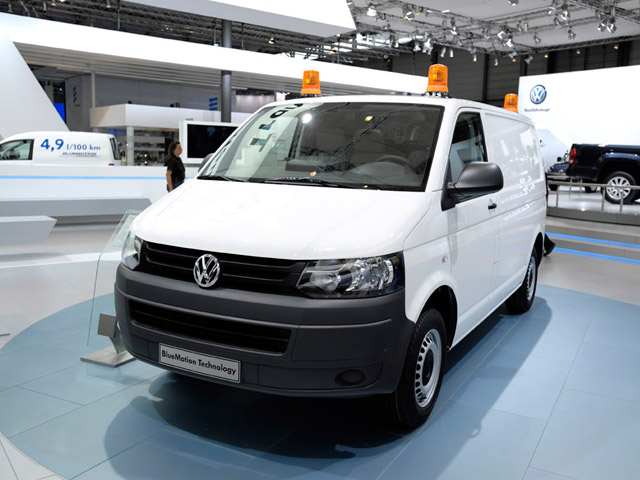
Hanover, 21st September 2010 – At the 63rd Commercial Vehicles IAA in Hanover (23rd to 30th September) the Volkswagen Commercial Vehicles brand will be demonstrating its great innovative strength. Alongside highlights like the new Caddy and Amarok, the Hanover based operation will be showing an especially frugal variant of the Transporter – the Transporter TDI with BlueMotion Technology and great potential for savings.

Compared to an equivalent model with the same engine from the current range, at just 6.8 l/100 km the Transporter with BlueMotion Technology needs 0.5 litres less diesel (equating to 179 rather than 193 g/km of CO2). This has been achieved by means of efficient, high-torque common rail four cylinder engines combined with a Stop-Start system, brake energy recovery, tyres with particularly low roll resistance and special aerodynamic measures.

“The 2.0-litre common rail diesel engine gives us a modern power plant in the range with great money saving potential,” says Dr Wolfgang Schreiber, spokesman for Volkswagen Commercial Vehicles’ Brand Management Board and Director of Technical Development.

“The special measures we have taken here enable fuel consumption to be reduced to a new record low in this class. Over the medium term we will also be combining this technology with our direct shift transmission.”

The Stop-Start system in detail
It is particularly interesting to take a look at how the fully intuitive Stop-Start system works: the driver approaches a red light in his BlueMotion Technology Transporter, slows to a stop, switches to neutral and takes his foot off the clutch. This immediately turns the engine off. The ‘Stop-Start’ indicator now appears on the multi-function display. As soon as the traffic lights switch to amber and the driver puts his foot on the clutch, the engine automatically starts, the ‘Stop-Start’ indicator goes out, the driver puts the vehicle into gear and drives on. There is nothing more to do than when driving a standard van. The Stop-Start system thus makes an appreciable contribution to cutting fuel consumption.

Regenerative braking in detail
Regenerative braking helps the vehicle to utilise energy used in driving in the best way possible. Whenever the Transporter with BlueMotion Technology is coasting or braking, i.e. whenever the driver simply lifts his foot off the accelerator or consciously brakes, the generator’s voltage gets increased and is utilised to significantly recharge the vehicle’s battery.

Thanks to this generator control and the fact that the battery is thus always optimally charged, the generator’s voltage can be reduced, for example during acceleration or when constantly maintaining the desired speed. That reduces the load on the engine and thus lowers consumption. In order to make use of regenerative braking special software is needed for the energy management system and modified software for the engine control unit.

The Transporter with BlueMotion Technology will be making its debut at the 2010 Commercial Vehicles IAA in Hanover. This most fuel-efficient Transporter ever will be incorporated into Volkswagen Commercial Vehicles’ model range as of early 2011.

The BlueMotion Technologies – A concept of sustainability
BlueMotionTechnologies include all products, basic technologies and innovations that significantly improve fuel economy and reduce emissions. These basic technologies represent the foundations of BlueMotion. Currently, they cover the TDI (turbocharged diesel direct injection) and TSI (boosted petrol direct injection) engines as well as the extremely efficient Direct Shift Gearbox (DSG). They are supplemented by technological innovations that include drive variants such as EcoFuel (natural gas
engines), BiFuel (liquid natural gas engines), MultiFuel (ethanol engines), hybrid systems and electric drives, as well as NOx emissions control, regenerative braking and the Stop-Start system. These basic technologies and innovations are getting incorporated into a growing range of products. These products / vehicles are currently grouped at Volkswagen Commercial Vehicles into three concept brands: ‘BlueMotion’, ‘BlueMotion Technology’ and ‘BlueTDI’.

BlueMotion: This concept brand represents the most fuel-efficient Volkswagen model in each vehicle class. They are specially designed and configured with TDI engines, and all trendsetters when it comes to fuel economy and low emissions.

BlueMotion Technology: Vehicles with BlueMotion Technology can be individually configured. Customers thus have a largely free choice of equipment lines and options. When it comes to the drive train, however, the cars are equipped with exceptionally fuel-efficient TDI and TSI engine variants. BlueMotion Technology is selected as an equipment package when purchasing a new car.

BlueTDI: The third BlueMotion Technologies brand is BlueTDI. It represents the cleanest diesel models in their respective classes. The common rail TDI engines of these Volkswagen commercial vehicles are combined as standard with an SCR catalytic converter that further reduces nitrogen oxide emissions.

Source: Volkswagen Commercial Vehicles

Thursday, July 8, 2010

MIDNIGHT LONDON CRUISE


Ladies and Gentlemen start your engines, Aerokit are organising the Midnight Cruise event for the 28th of August 2010, check our facebook page for all the details!

Friday, July 2, 2010

NEW PRODUCT LAUNCH Aerokit 350z Sidesteps


The new Aerokit 350z sidesteps are now in production. After months of R+D we are pleased to add this part to our extensive range of aero products. The sidesteps are available in a Glossy Black or white gelcoat finish. Not only do they look fantastic once installed they prevent air rolling in from underneath the sides of the car. As a result they increase the stability whilst cornering at high speeds and increase traction.